Case study 02
Viral Drobe
Honest fit and quality, through creator try-on reels.
In short
- The problem
- Online fashion often disappoints: model photos and camera angles flatter the clothes, and reviews are written by bots, paid for, conflicting or posted by people with no reputation at stake.
- The insight
- Reviewers have nothing to lose, so reviews are unreliable. Fashion influencers do: their reputation is at stake, which makes a try-on reel from one a more trustworthy signal than a photo or a text review.
- The outcome
- An end-to-end concept: an app where influencers post clothing-review and styling reels, with direct purchase links and affiliate earnings, grounded in interviews with 12 online shoppers from different countries.
12
online shoppers interviewed, from different countries
Research phase of this case study
Act I — Setup
Setup
The fashion industry is constantly evolving, especially with the rise of online shopping.
Buying clothes on the internet has become part of everyday life because it allows people to order items anytime and from anywhere, without the limitations of physical stores such as distance or opening hours. Beyond purchasing clothes, the internet has also become a major source of fashion inspiration through platforms like Pinterest and Instagram, where anyone can showcase their style and act as a model without traditional industry barriers.
Ordering clothes from an e-commerce website doesn’t always turn out well. One major advantage of physical stores that online shopping still struggles to replicate is the ability to assess quality and fit. With the rise of fast fashion, many online vendors use model photos and cinematic camera angles to make the clothes appear more appealing than they actually are. However, the real product often fails to match the images in terms of material, quality, or fit. Without the ability to try on the clothes or feel the fabric, shoppers can’t truly know what they’re getting.
Act II — Research
Research
I interviewed 12 online shoppers from different countries, and most of them reported the same set of problems.
What the shoppers told me
- The model pictures are misleading and do not represent the actual product.
- Many reviews are either written by bots or paid for by the seller, making them unreliable.
- Competitor brands sometimes post negative reviews to drive traffic away from the product.
- Reviews are often conflicting, making it difficult to tell whether an issue is widespread or just an isolated case.
- Reviewers have nothing to lose in terms of reputation, so it’s easy for them to post inaccurate or exaggerated claims about the clothing.
Act III — Explorations
The solution
Based on the identified problems and user research, the proposed solution is to create an app where fashion influencers post video reels reviewing clothing items.
These videos help users assess the authenticity, quality, and fit of the clothes, addressing the issue of product misrepresentation. Instead of relying solely on photos and text reviews, the platform would feature real users—who are not affiliated with the brands—trying on the clothes and giving honest feedback.
Influencers
Fashion influencers have grown significantly on social media, where people eagerly share their style and inspire others. They are an ideal fit for reviewing clothing because their personal reputation is at stake.
The app’s key features
- Clothing reviews. Video reels where influencers review clothing items and share their honest impressions.
- Styling reels. Short videos where influencers showcase different ways to style the outfits and combine colours.
- Product purchase. Users can purchase the featured clothing items through direct links to the brand’s website.
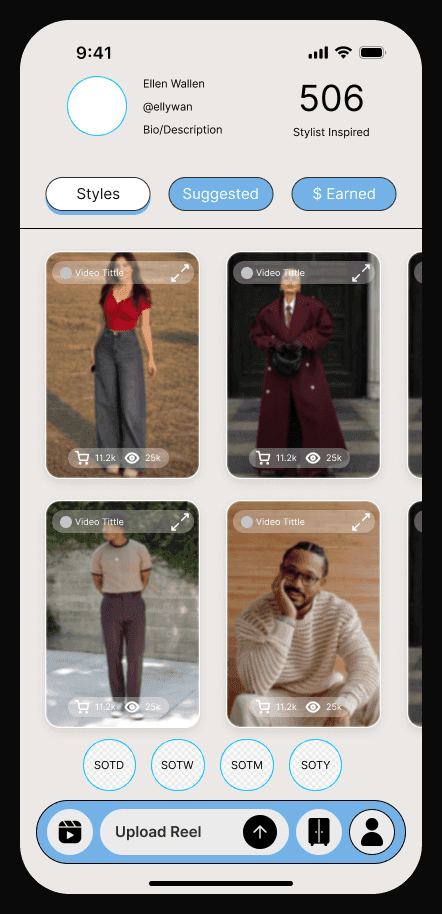
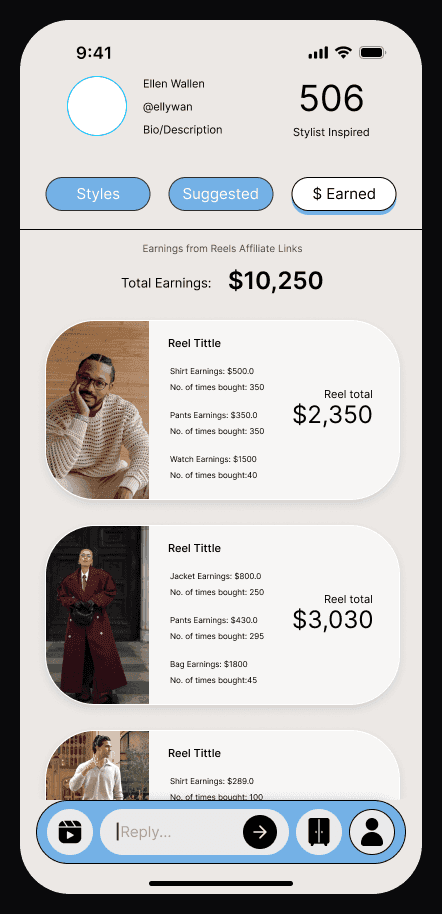
- Affiliate earnings. Influencers earn a commission from purchases made through their review or styling reels.
Personas
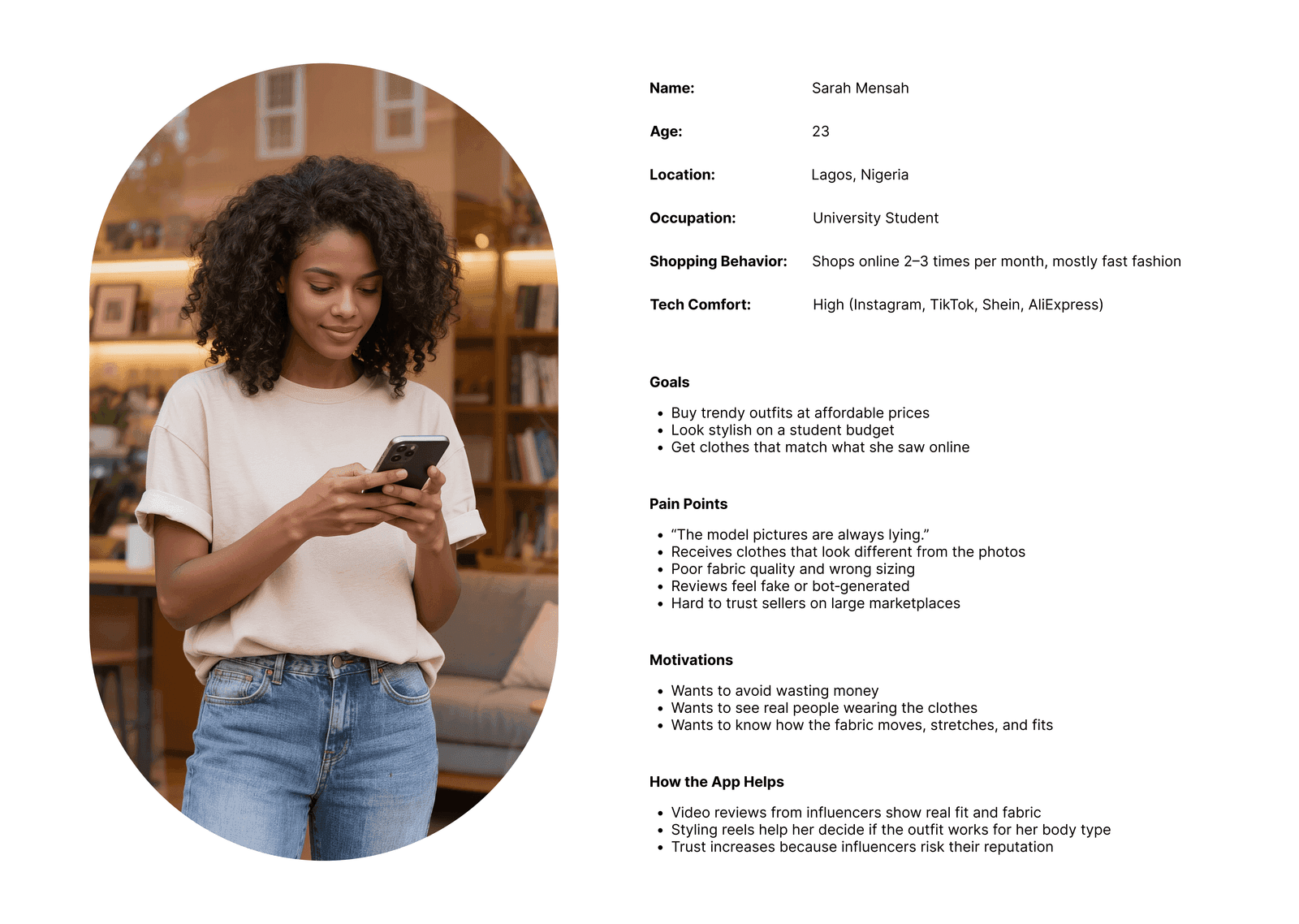
Read the three personas as text
Sarah Mensah
- Age: 23
- Location: Lagos, Nigeria
- Occupation: University Student
- Shopping behaviour: Shops online 2–3 times per month, mostly fast fashion
- Tech comfort: High (Instagram, TikTok, Shein, AliExpress)
Goals
- Buy trendy outfits at affordable prices
- Look stylish on a student budget
- Get clothes that match what she saw online
Pain points
- “The model pictures are always lying.”
- Receives clothes that look different from the photos
- Poor fabric quality and wrong sizing
- Reviews feel fake or bot-generated
- Hard to trust sellers on large marketplaces
Motivations
- Wants to avoid wasting money
- Wants to see real people wearing the clothes
- Wants to know how the fabric moves, stretches, and fits
How the app helps
- Video reviews from influencers show real fit and fabric
- Styling reels help her decide if the outfit works for her body type
- Trust increases because influencers risk their reputation
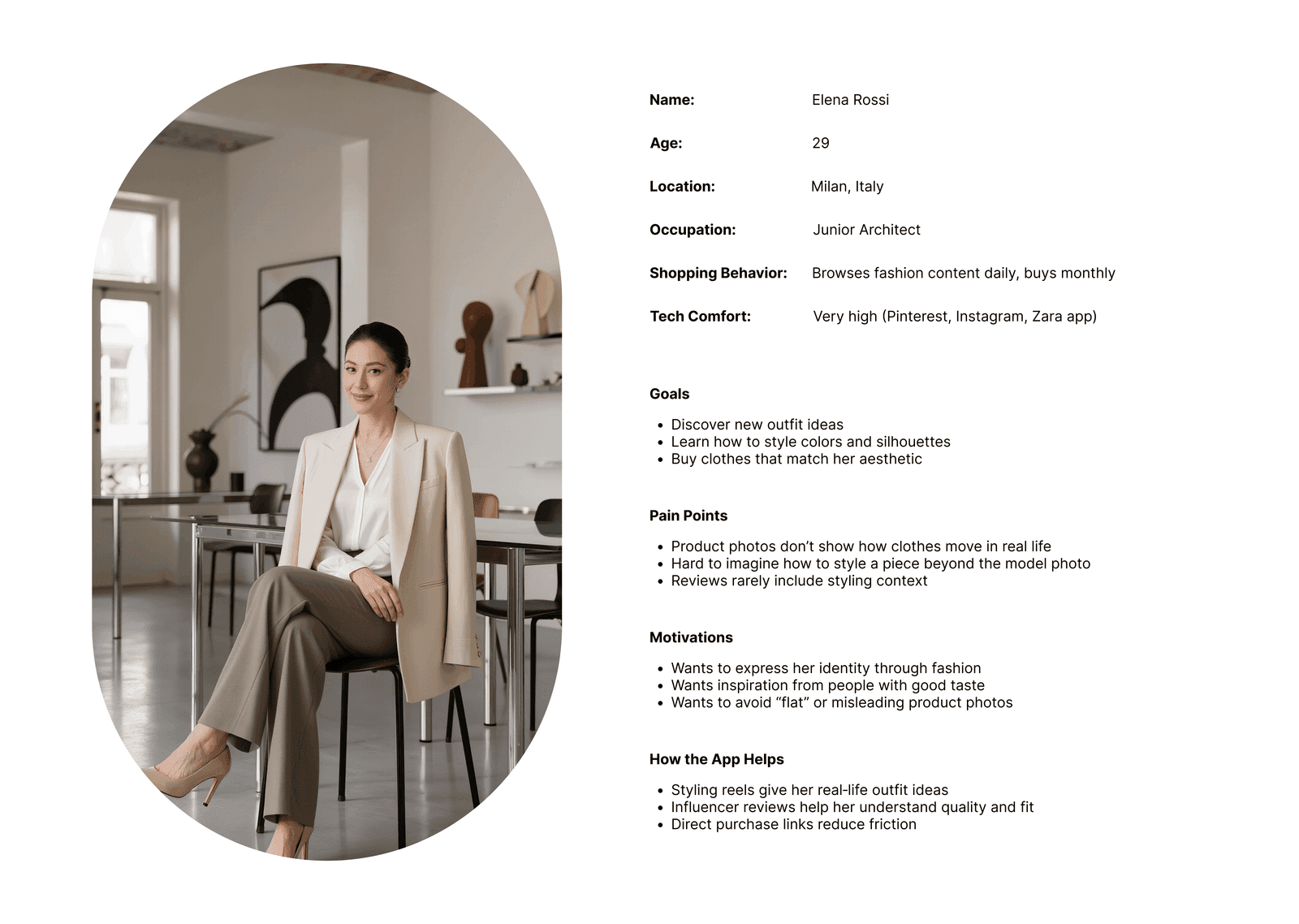
Elena Rossi
- Age: 29
- Location: Milan, Italy
- Occupation: Junior Architect
- Shopping behaviour: Browses fashion content daily, buys monthly
- Tech comfort: Very high (Pinterest, Instagram, Zara app)
Goals
- Discover new outfit ideas
- Learn how to style colours and silhouettes
- Buy clothes that match her aesthetic
Pain points
- Product photos don’t show how clothes move in real life
- Hard to imagine how to style a piece beyond the model photo
- Reviews rarely include styling context
Motivations
- Wants to express her identity through fashion
- Wants inspiration from people with good taste
- Wants to avoid “flat” or misleading product photos
How the app helps
- Styling reels give her real-life outfit ideas
- Influencer reviews help her understand quality and fit
- Direct purchase links reduce friction
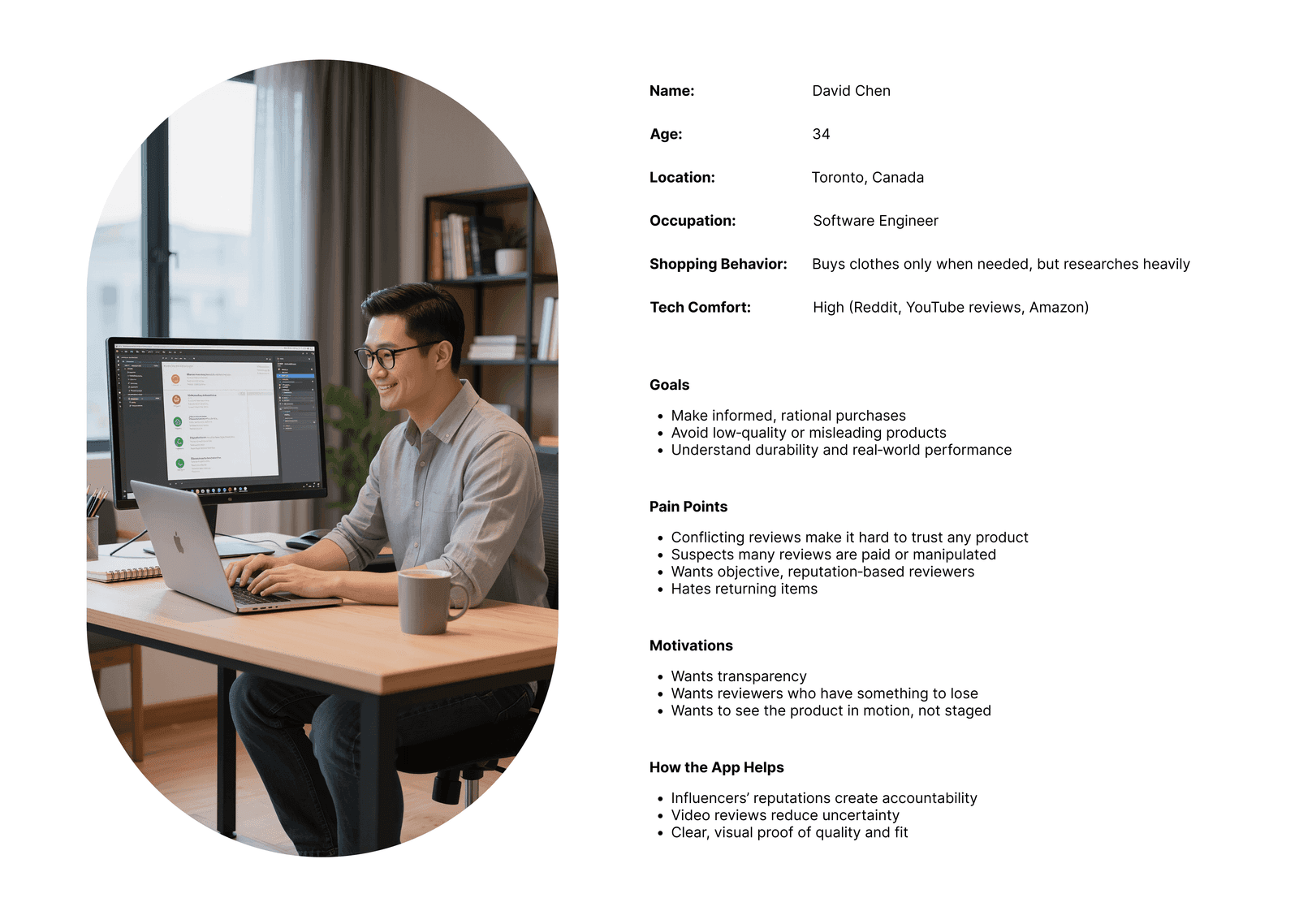
David Chen
- Age: 34
- Location: Toronto, Canada
- Occupation: Software Engineer
- Shopping behaviour: Buys clothes only when needed, but researches heavily
- Tech comfort: High (Reddit, YouTube reviews, Amazon)
Goals
- Make informed, rational purchases
- Avoid low-quality or misleading products
- Understand durability and real-world performance
Pain points
- Conflicting reviews make it hard to trust any product
- Suspects many reviews are paid or manipulated
- Wants objective, reputation-based reviewers
- Hates returning items
Motivations
- Wants transparency
- Wants reviewers who have something to lose
- Wants to see the product in motion, not staged
How the app helps
- Influencers’ reputations create accountability
- Video reviews reduce uncertainty
- Clear, visual proof of quality and fit
User flow
Read the user flow as text
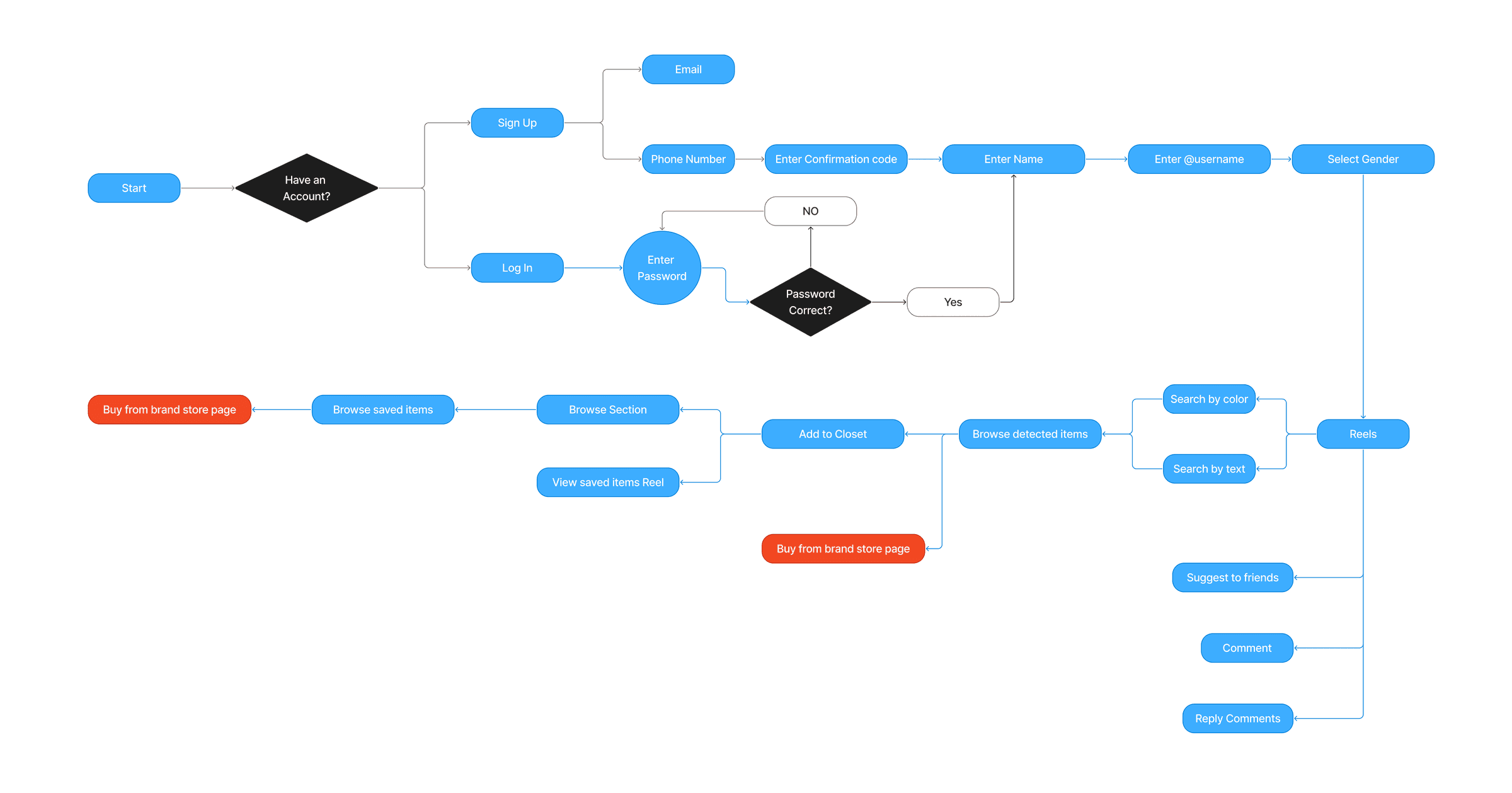
- Start. Does the person have an account?
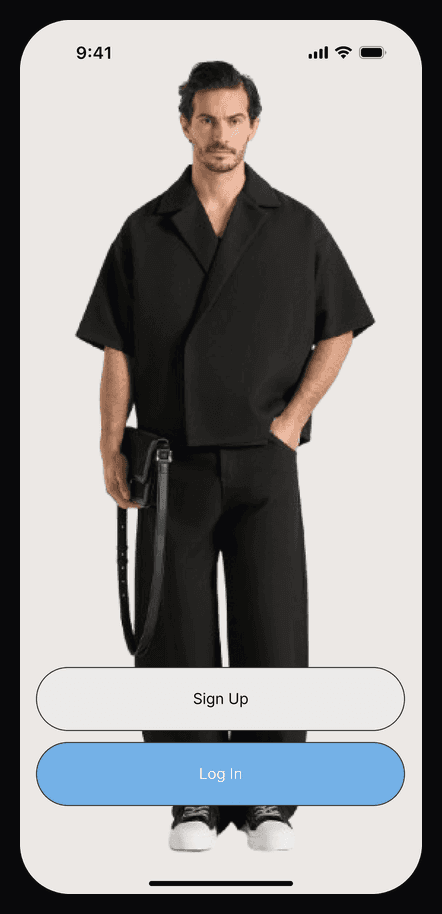
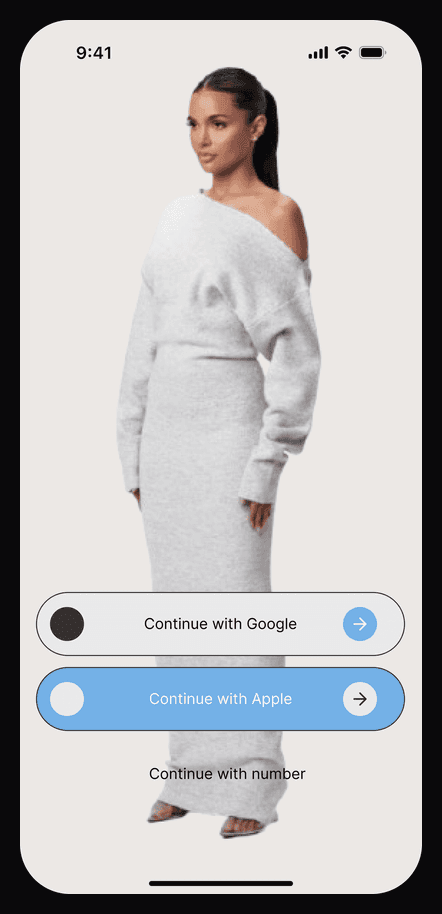
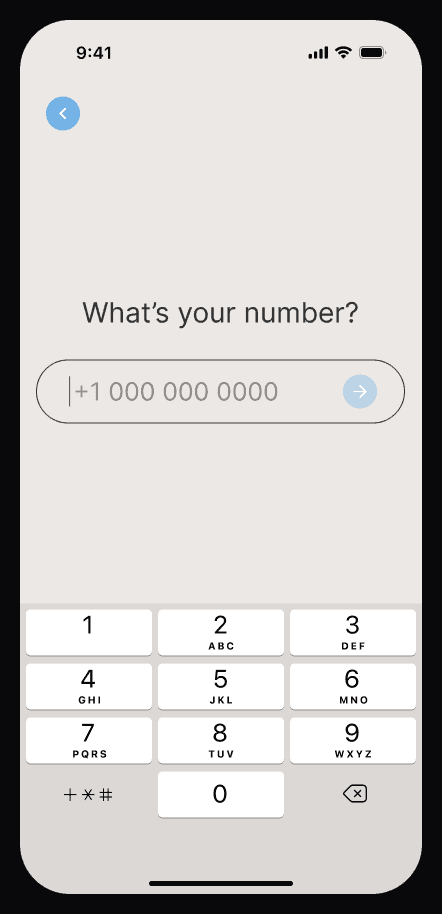
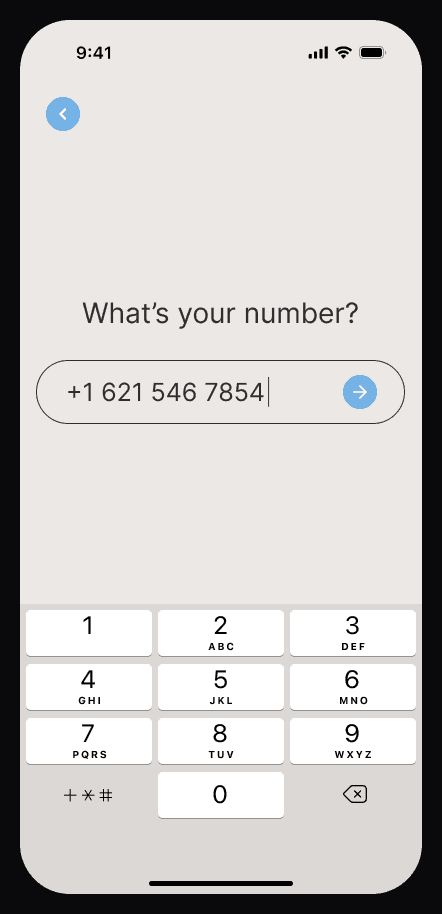
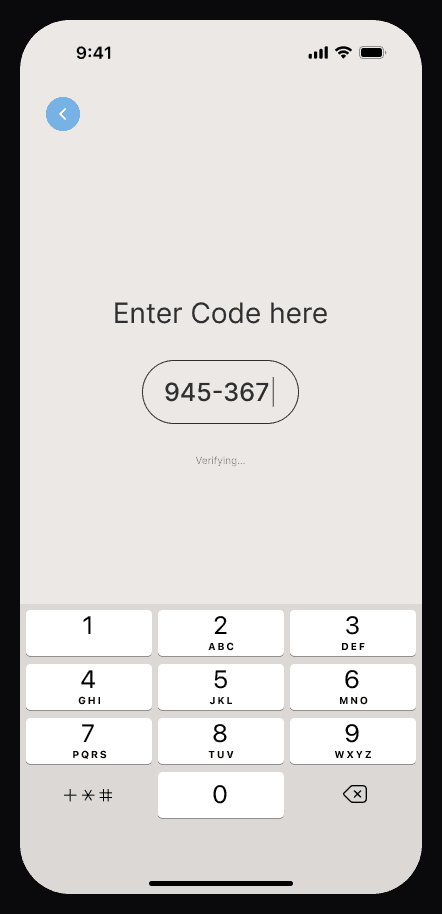
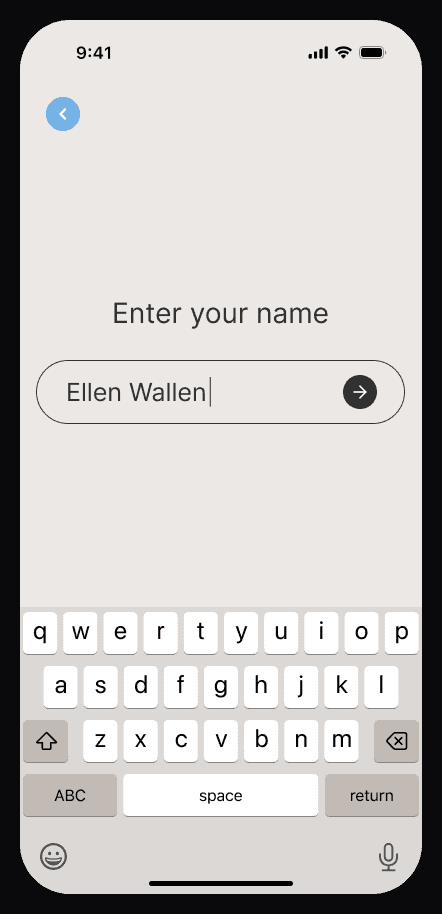
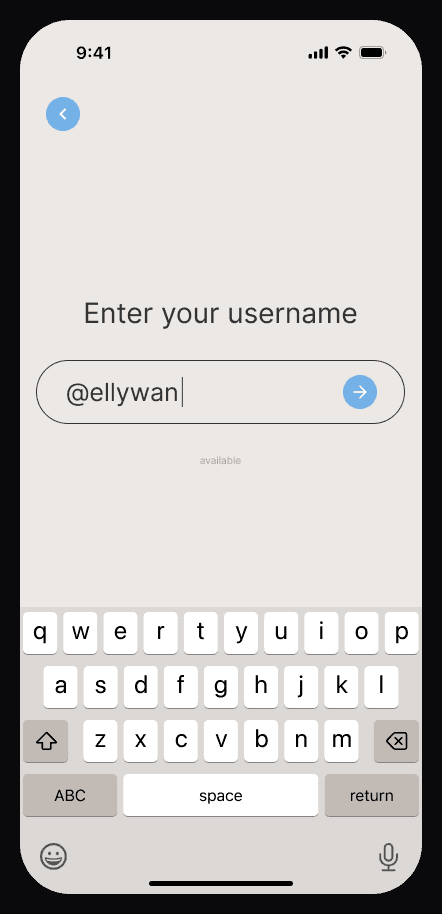
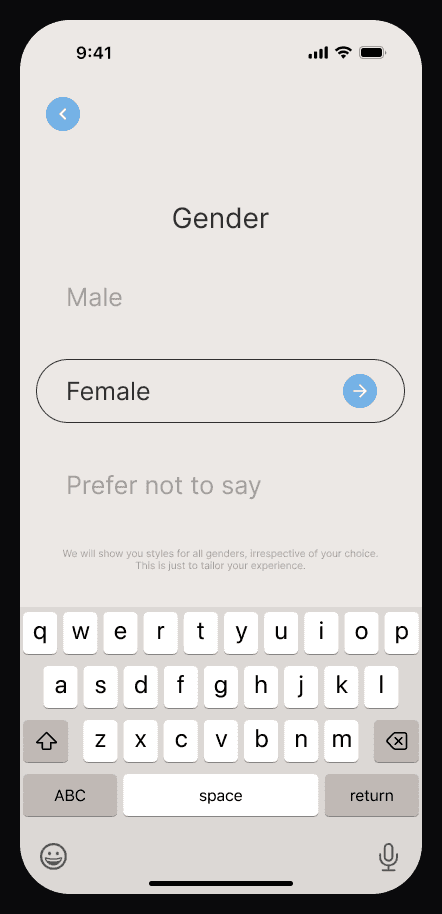
- Sign up is by email or by phone number. By phone: enter the confirmation code, then enter a name, then an @username, then select a gender, which leads to Reels.
- Log in. Enter the password. If it is not correct, the person enters it again. If it is correct, the flow continues to entering a name.
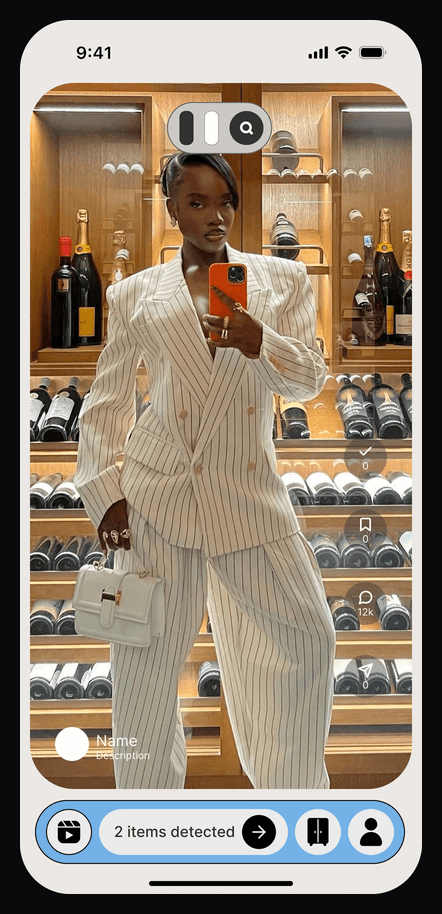
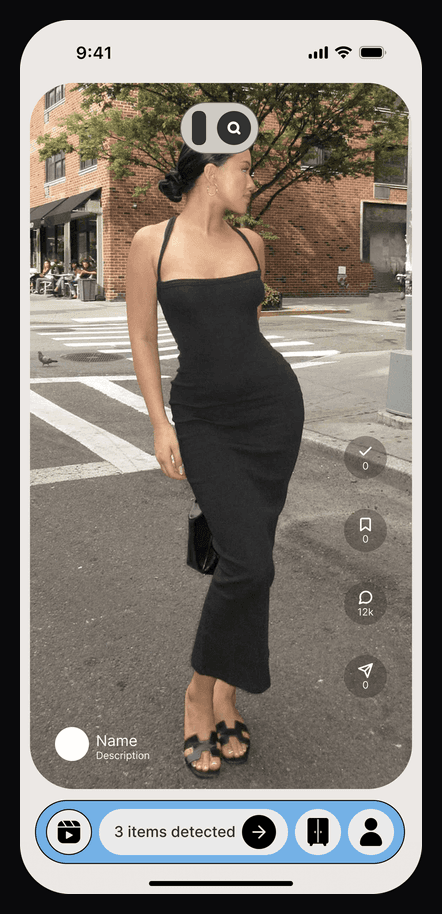
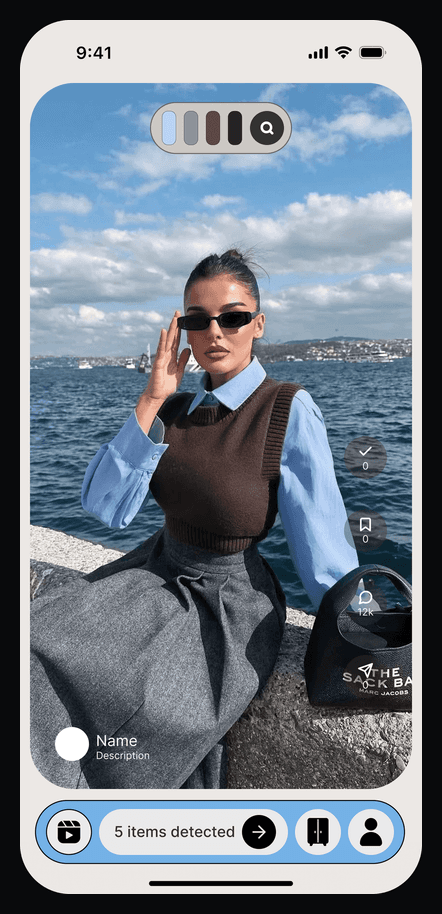
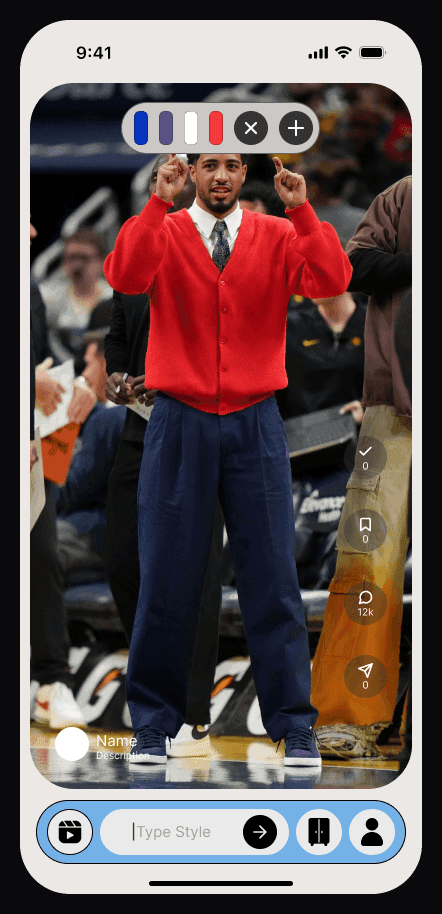
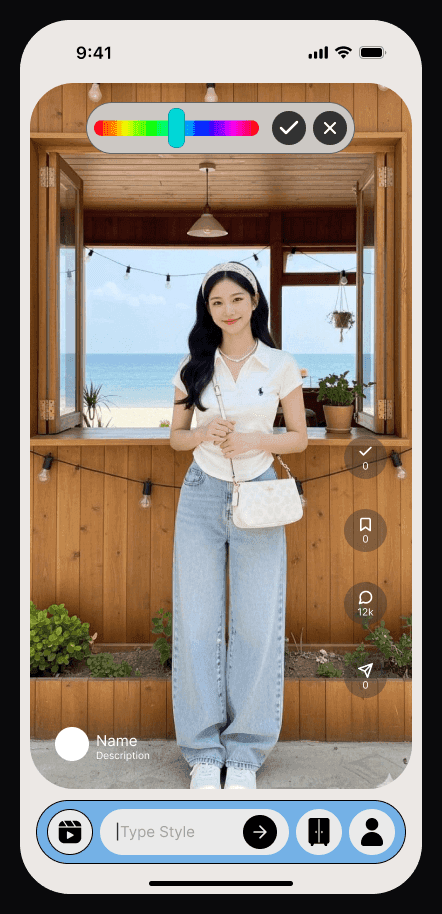
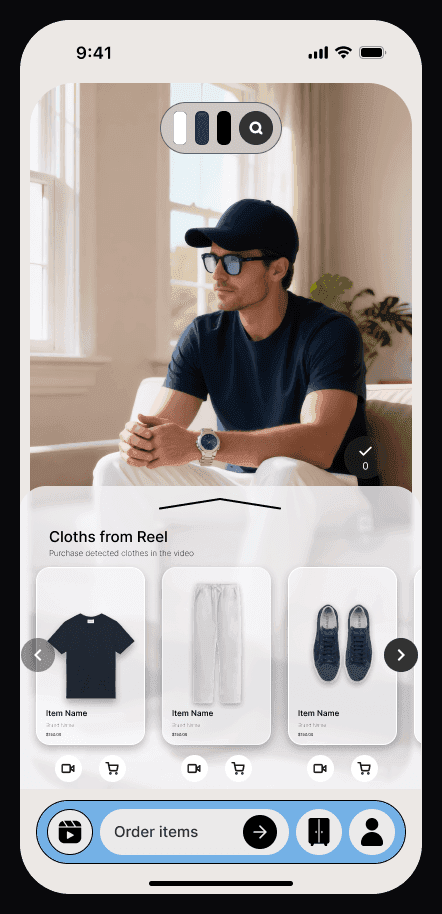
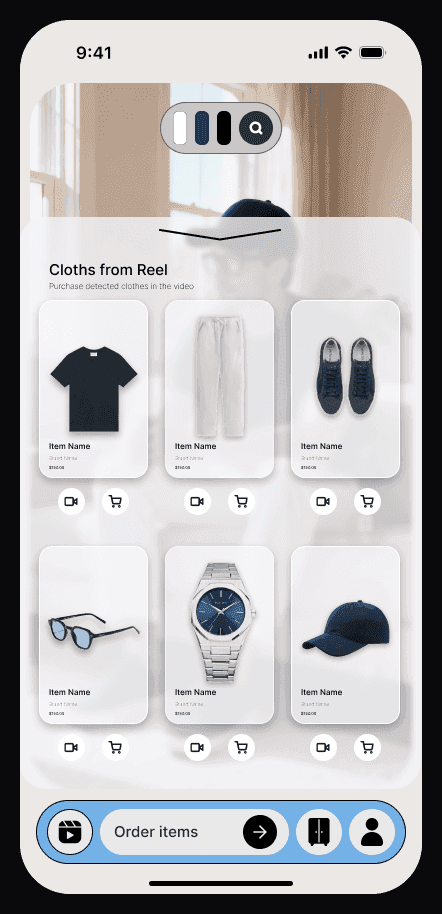
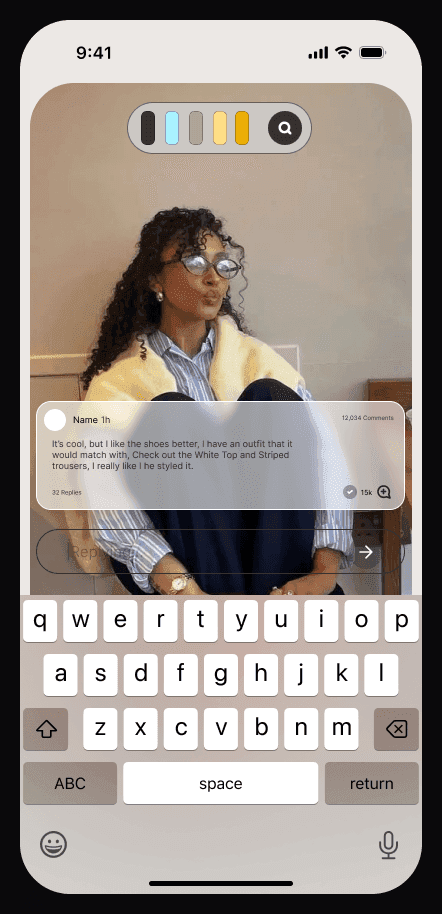
- Reels is the centre of the app. From a reel the person can search by colour or search by text, which leads to browsing the detected items. They can also suggest the reel to friends, comment, and reply to comments.
- Browsing detected items leads either to buying from the brand’s store page, or to adding an item to the closet.
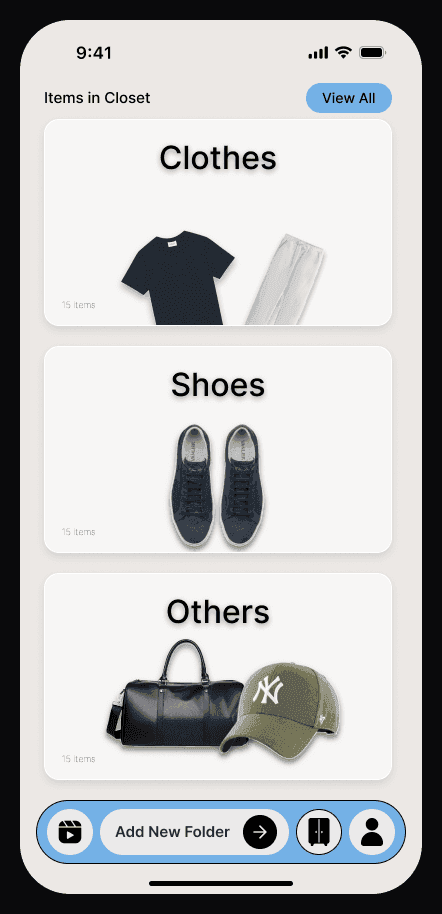
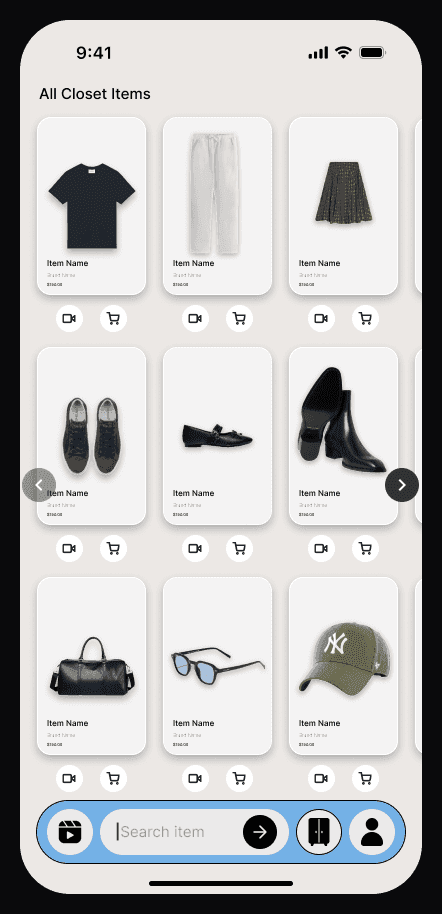
- The closet lets the person browse a section, browse saved items and buy from the brand’s store page, or view the saved items as a reel.
Act VI — Final
Final design
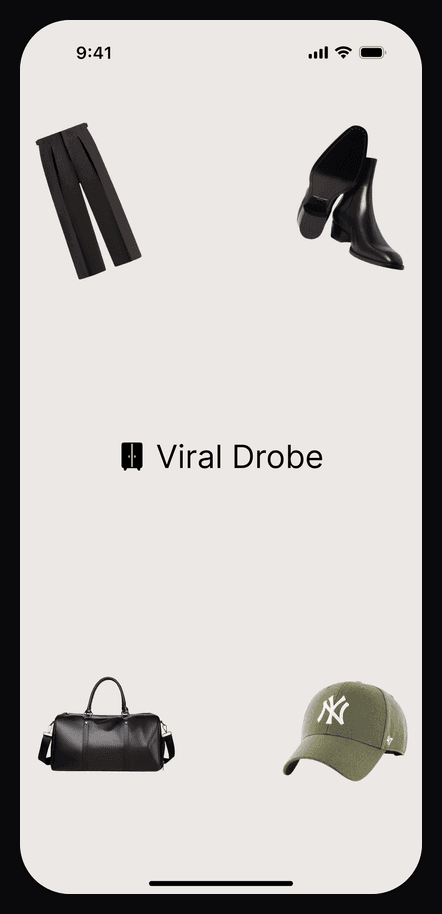
The final design, screen by screen.
Design system
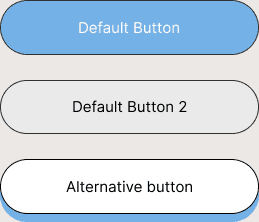
The primary colours are #74B1E6 and #ECE8E5.
Getting in
Reels
The closet
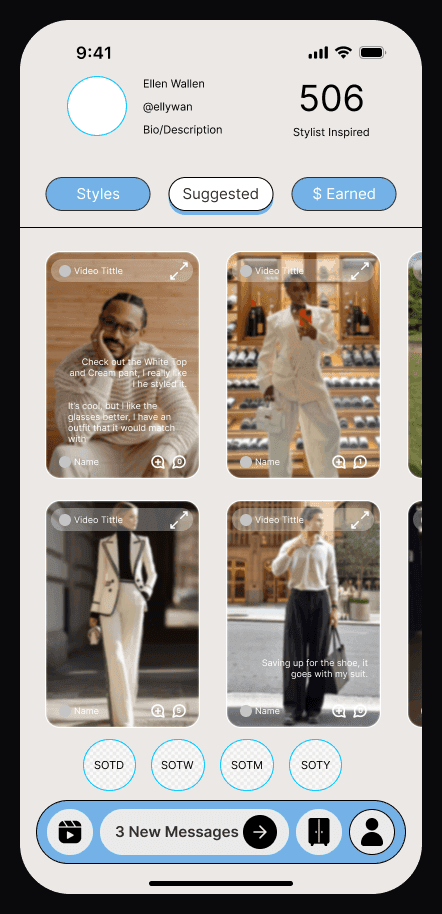
Profile and earnings